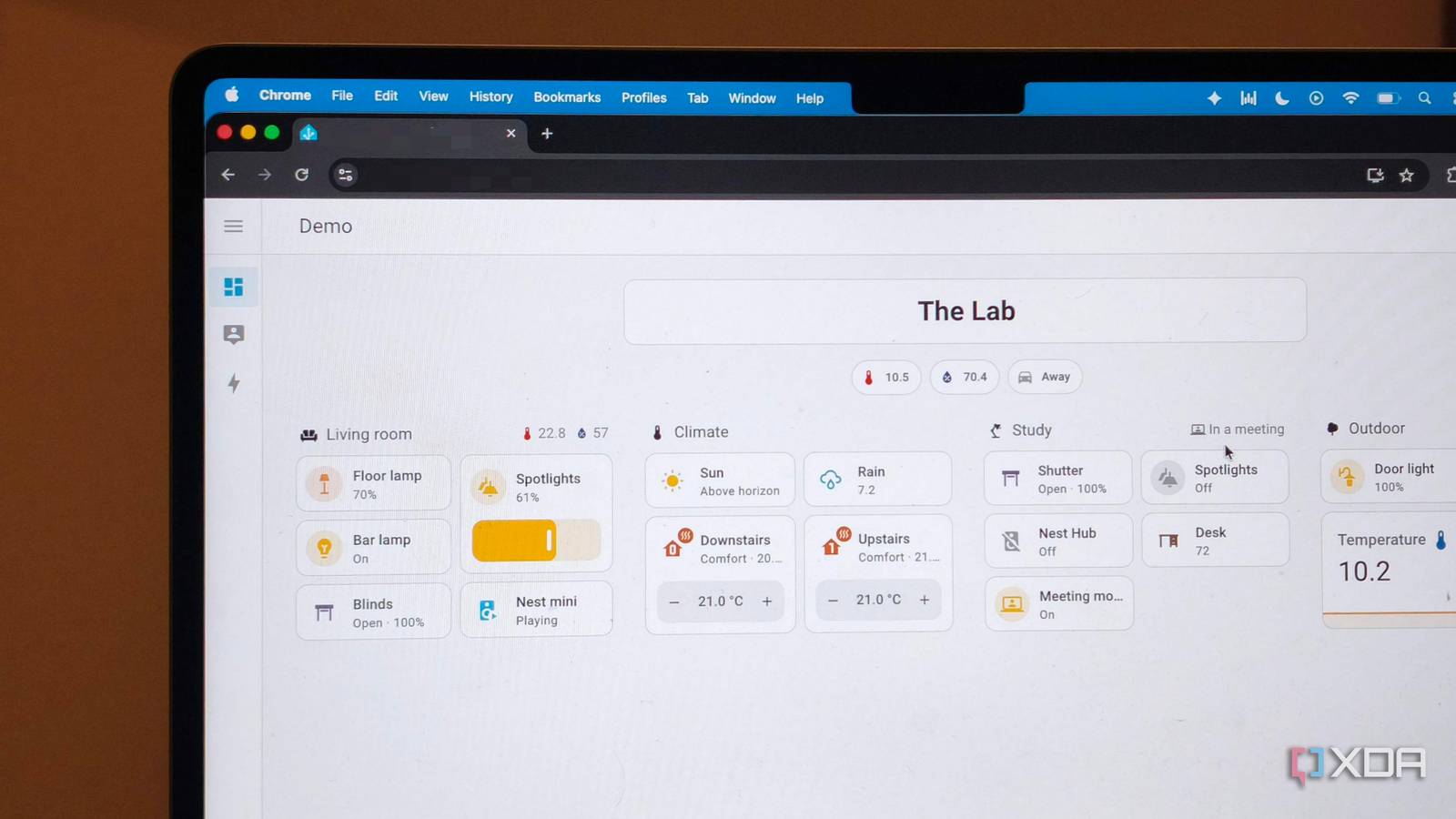
I replaced my smart home hub with a $120 mini PC, and my smart home finally feels responsive
… My builds weren’t as compact as the commercial sensors, but they kept all the data local, worked reliably, and cost much less. …
… My builds weren’t as compact as the commercial sensors, but they kept all the data local, worked reliably, and cost much less. …
… Then, I flashed another custom firmware for the new sensor and built another device in less than an hour. What sold me was that every ESP32 device I built worked locally, without a cloud dependency. …
… It's the ultimate digital glue that turns a drawer full of old dev boards and sensors into a high-end, local-only smart home system . …
… Next, define the sensors, compile the firmware, and flash it. Every ESPHome-configured Thread device can also act as a router in the mesh. I just need to define the Full Thread Device FTD mode in the YAML. So the ESP32 board isn’t just a sensor hub; it also works as a Thread mesh range extender. …
… For instance, did you know there's a sensor that can track lightning strikes within 25 miles? I had no idea it even existed until I checked out the Flash Bee, which combines the sensor with an ESP32 chip. …
… I was finally able to do complex tasks, like having an IKEA motion sensor trigger a Philips Hue light that sends a notification to my iPhone, and dimming my Plex media player. With Home Assistant, most of my devices now communicate over the local network. …
… Replacing Google Assistant with a local LLM A private voice assistant that works locally With the help of a local LLM and Home Assistant’s voice pipeline, I built a private voice assistant that works locally. …
… I built a reliable room-level presence detection sensor , a private assistant that works with a local LLM , a multi-sensor node with several components wired together, and a YAML file to store the respective configurations. …
… Don't just hit "Permit Join" or "when re-adding battery-powered sensors." Go to the explicit drop-down menu of your closest high-quality designated room repeater and select "Permit Join this device only." This forces the sensor to bind directly to its closest neighbor instead of trying to talk to a… …
… Making the Pi read the PIR sensor data every 30 seconds seemed like an overkill use of the hardware. So I moved to using ESP32 boards for building sensor nodes and a few other projects. That switch initially helped with the IoT projects involving sensors and proxies Bluetooth and Infrared . …