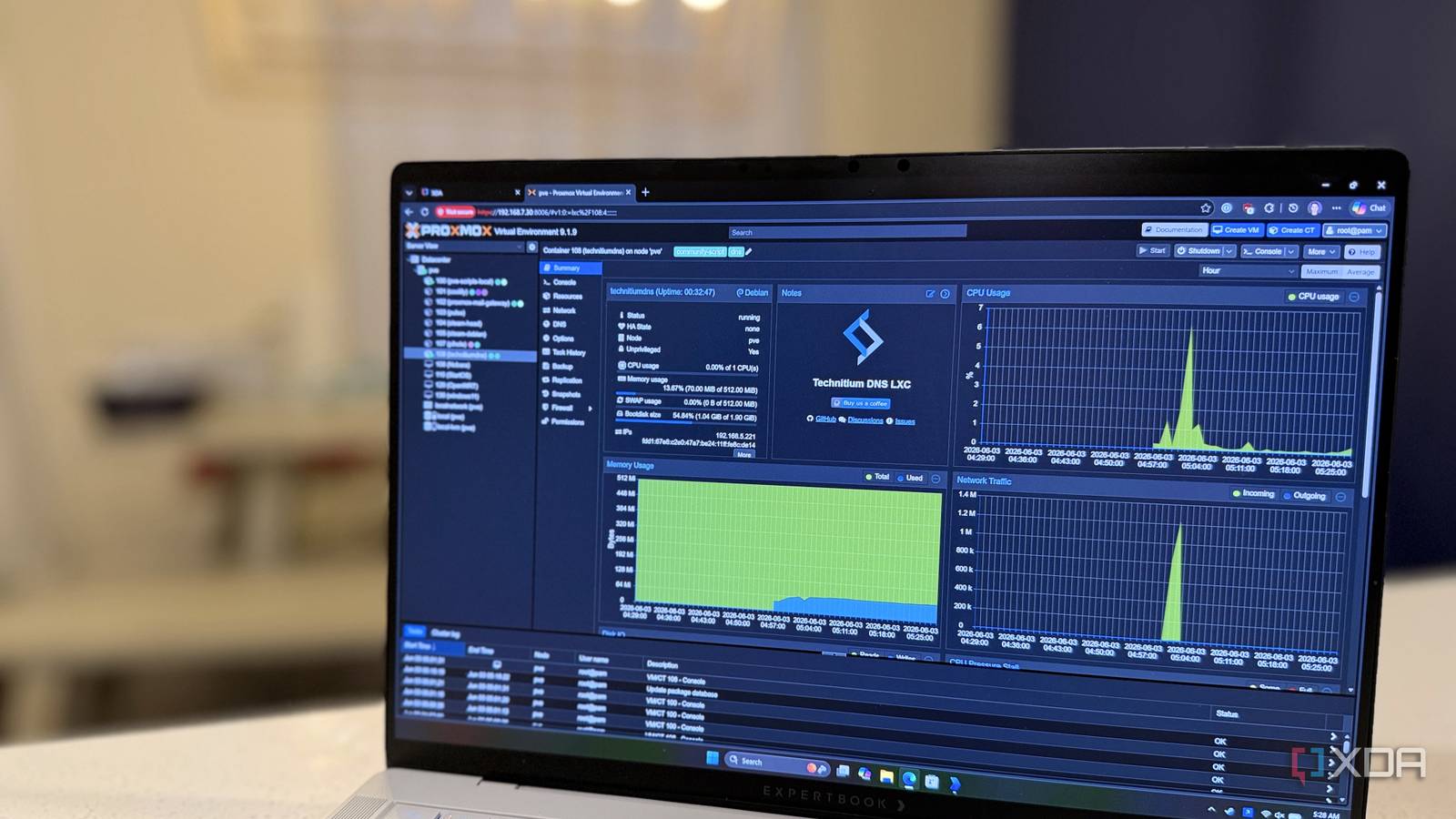
Proxmox VE is a free and open-source virtualization platform built on Debian. It supports KVM virtual machines, LXC containers, ZFS storage, clustering, backups, live migration, and high-availability features. For home labs, the big advantage is flexibility. You can run a Windows VM, a Linux server, Home Assistant, Docker, Pi-hole, Plex, Jellyfin, TrueNAS, or even pfSense on the same physical system. For small businesses or more advanced users, Proxmox can scale into multi-node clusters with shared storage and centralized management. The main tradeoff is that Proxmox is infrastructure software
If you’re still comparing virtualization platforms, these guides are the best place to start: Proxmox vs ESXi
Proxmox vs KVM
Proxmox vs Hyper-V
XCP-ng vs Proxmox
Unraid vs Proxmox if you’re deciding between a NAS-focused OS and a hypervisor In general, I’d choose Proxmox if your main goal is virtualization. I’d choose Unraid or TrueNAS if your main goal is NAS storage, and virtualization is secondary. Proxmox can do storage, and NAS operating systems can run VMs, but picking the tool that matches your main use case usually leads to a better setup.