Trending Now RSS

NASA

Saves to local browser storage. Followed topics appear on the homepage and refresh on each visit.
More context

People are focused on several near-term NASA missions and hardware milestones, including Perseverance’s progress on Mars, upcoming space telescope rescue efforts, and a new telescope nearing launch. There’s also attention on NASA’s next Mars partnership and new rover testing aimed at faster obstacle climbing.

Also known as nasa artemis·nasa artemis iii·nasa risc-v space chip·nasa space chip·nasa mars mission

1.4 Activity score up · 2d
2.2 Peak score 3d window
Positive Sentiment
3 Sources · 6 signals
Last updated · next ~15:00
3d First on radar
Key Takeaway NASA’s near-term headlines center on active Mars surface progress and imminent launch/testing efforts, especially Perseverance’s continued operations and an upcoming telescope mission.
AI summary · grounded in cited sources
Mars rover progress Upcoming mission launches New telescope rollout Robotics mobility testing nasa artemis
AI Brief

NASA’s near-term headlines center on active Mars surface progress and imminent launch/testing efforts, especially Perseverance’s continued operations and an upcoming telescope mission.

People are focused on several near-term NASA missions and hardware milestones, including Perseverance’s progress on Mars, upcoming space telescope rescue efforts, and a new telescope nearing launch. There’s also attention on NASA’s next Mars partnership and new rover testing aimed at faster obstacle climbing.

Trending Activity ▲ +0.8 24h
Trend score · left axis Sentiment score · right axis

Live Wire

Top 3 signals · NASA’s near-term headlines center

Broader NASA coverage

Other NASA activity — not part of the “NASA’s near-term headlines center” story

Briefing Findings · NASA’s near-term headlines center

Story-specific findings extracted from this briefing's coverage. Fast Facts in the sidebar holds the canonical reference data (CEO, founded, ticker).

Mars distance Perseverance traveled a marathon-length distance on Mars
Mars rover testing NASA is testing a rover that can drive faster and lift its wheels to climb obstacles
Telescope rescue timing Swift Boost mission will launch later this month to rescue a falling telescope
Telescope scope Roman Telescope nears launch with billions of galaxies in sight
Partnership angle New Mars partnership sets up a private race with SpaceX

What to Watch

  • Watch for launch timing and updates on NASA’s Swift Boost mission later this month. Engadget
  • Track Roman Telescope countdown coverage as the new telescope nears launch and targets billions of galaxies. HotHardware
  • Follow announcements and outcomes of NASA’s private Mars partnership competition with SpaceX. HotHardware

What Changed

  • NASA's New Roman Telescope Nears Launch With Billions Of Galaxies In Sight HotHardware
  • NASA's Perseverance rover has traveled the distance of a marathon on Mars Engadget
  • NASA's Swift Boost mission will launch later this month to rescue a falling telescope Engadget
Source-backed brief 6 articles across 3 publications · brief is source backed Show all sources

Latest from across the web

External coverage we have crawled and indexed for this topic.

View all 10 signals →

What each outlet is saying

Source-by-source view of what publications and communities are surfacing right now.

Discovery

Videos

Topic-matched media from the channels we track

Discussions on the web

Recent threads on Reddit and Hacker News that mention NASA.

More in search →

People also ask

Common questions on NASA, surfaced from across the indexed web.

What is the Nancy Grace Roman Telescope looking for?

The telescope is named after astronomer Nancy Grace Roman, NASA's first female executive and an instrumental voice in the planning and construction of the Hubble Space Telescope.  The two telescopes share more than just a connection to Roman. Both use 2.4-meter mirrors and can produce images with similar sharpness. But Roman is designed to see much more of the sky at once, capturing images at least 100 times larger than Hubble's. The observatories also specialize in different wavelengths of light: Hubble observes ultraviolet, visible and near-infrared light, while Roman focuses on visible and

NASA's Nancy Grace Roman Telescope Is Ready to Start Its Cosmic Survey
What if the landers are not ready?

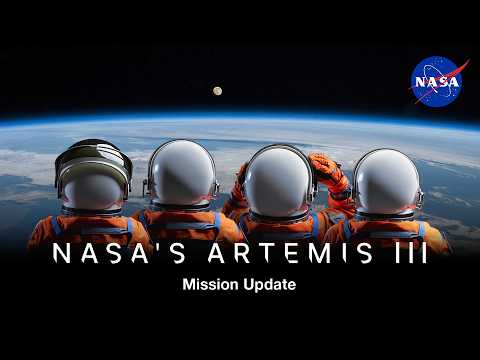
NASA faces significant challenges to bring about the Artemis III mission next year and to complete a series of test objectives involving the interaction between Orion and the two lunar lander prototypes. So what happens if the Space Launch System rocket and Orion spacecraft are ready next summer, but one or both of the landers is not? Isaacman said they would not launch Artemis III until they are ready to fly a meaningful mission. “I would say, at a very high level, we’re not going to launch this mission until we feel like the objectives that are outlined are sufficient to bring down the risk

NASA assigns crew for Artemis III, sets aggressive timeline for flying it
What needs more work?

Something caused two Raptor engines—one of 33 on the Super Heavy booster and one of six on Starship itself—to fail during Friday’s launch sequence. Raptor failures are nothing new for SpaceX, but this flight marked the first use of the company’s upgraded Raptor 3, a redesign with higher thrust, lighter weight, and improved efficiency. Collectively, the 33 Raptor engines on the booster produced up to 18 million pounds of thrust at full throttle, twice the power of NASA’s Space Launch System rocket used on last month’s Artemis II mission. Starship and Super Heavy have engine-out capability, mean

SpaceX's Starship V3—still a work in progress—mostly successful on first flight
How to get there?

A future with numerous robotic probes spread throughout the Solar System sounds thrilling to space scientists and space enthusiasts, but you can’t get there with flat budgets and billion-dollar missions that take a decade to get off the ground. Many of NASA’s robotic science missions use purpose-built satellites and instruments, usually manufactured by large contractors like Lockheed Martin, Northrop Grumman, university labs, or NASA itself. Unlike SpaceX’s hangars full of reusable rockets, there’s no building with cameras, spectrometers, telescopes, and spacecraft buses—the core chassis of a

"I'll buy 10 of those"—NASA science chief yearns for mass-produced satellites
Share & embed Quotables, social share, embed snippet

Share

Quotables · click to copy

Verbatim claims you can cite from the briefing. Each quote is sourced from indexed coverage — paste into your own writing or social.

Embed widget

<script src="https://ttek2.com/embed/pulse/nasa" async></script>