Trending Now RSS

NASA

Saves to local browser storage. Followed topics appear on the homepage and refresh on each visit.
More context

The NASA-related discussion is split between scrutiny of NASA’s internal management approach and technical-policy friction involving the ISS, specifically over a plan by Roscosmos to address a leaking segment. Separately, there’s also attention on NASA’s public-facing space imagery/storytelling around spectacular stellar phenomena.

Limited signal. This briefing is built from 2 sources — treat the summary as preliminary, not a comprehensive newsroom report.

Also known as nasa artemis·nasa artemis iii·nasa risc-v space chip·nasa space chip·nasa mars mission

1.8 Activity score up · 1d
2.1 Peak score 2d window
Neutral Sentiment
2 Sources · 3 signals
Last updated · next ~17:30
2d First on radar
Key Takeaway NASA appears to be pushing back on Roscosmos’ ISS leak-related plans while broader coverage also highlights NASA’s ongoing astronomy storytelling.
AI summary · grounded in cited sources
ISS leak politics NASA management transparency Astronomy visuals nasa artemis nasa artemis iii
Neutral 45/100
AI Brief

NASA appears to be pushing back on Roscosmos’ ISS leak-related plans while broader coverage also highlights NASA’s ongoing astronomy storytelling.

The NASA-related discussion is split between scrutiny of NASA’s internal management approach and technical-policy friction involving the ISS, specifically over a plan by Roscosmos to address a leaking segment. Separately, there’s also attention on NASA’s public-facing space imagery/storytelling around spectacular stellar phenomena.

Trending Activity ▲ +0.6 24h
Trend score · left axis Sentiment score · right axis

Live Wire

Top 1 signals · NASA appears to be pushing back

Broader NASA coverage

Other NASA activity — not part of the “NASA appears to be pushing back” story

Briefing Findings · NASA appears to be pushing back

Story-specific findings extracted from this briefing's coverage. Fast Facts in the sidebar holds the canonical reference data (CEO, founded, ticker).

Partner named Roscosmos
ISS issue mentioned A leaky ISS segment
NASA response Said 'nyet' to Roscosmos’ plan
Management topic Wants a word with no explanation given

What to Watch

  • Follow updates on ISS leak fixes involving Roscosmos and NASA’s response to that plan. The Register
  • Watch for additional NASA coverage tying “dead stars” imagery to new public releases or explanations. HotHardware

What Changed

  • NASA said nyet to Roscosmos plan to cut into leaky ISS segment The Register
Source-backed brief 1 article across 1 publication · brief is source backed Show all sources
Broader NASA coverage · not part of the NASA appears to be pushing back story

Latest from across the web

External coverage we have crawled and indexed for this topic.

View all 5 signals →

What each outlet is saying

Source-by-source view of what publications and communities are surfacing right now.

Discovery

Videos

Topic-matched media from the channels we track

Discussions on the web

Recent threads on Reddit and Hacker News that mention NASA.

More in search →

People also ask

Common questions on NASA, surfaced from across the indexed web.

What if the landers are not ready?

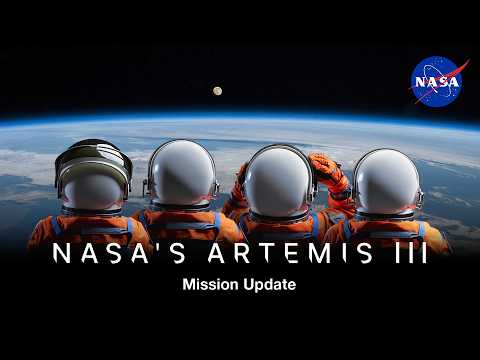
NASA faces significant challenges to bring about the Artemis III mission next year and to complete a series of test objectives involving the interaction between Orion and the two lunar lander prototypes. So what happens if the Space Launch System rocket and Orion spacecraft are ready next summer, but one or both of the landers is not? Isaacman said they would not launch Artemis III until they are ready to fly a meaningful mission. “I would say, at a very high level, we’re not going to launch this mission until we feel like the objectives that are outlined are sufficient to bring down the risk

NASA assigns crew for Artemis III, sets aggressive timeline for flying it
What needs more work?

Something caused two Raptor engines—one of 33 on the Super Heavy booster and one of six on Starship itself—to fail during Friday’s launch sequence. Raptor failures are nothing new for SpaceX, but this flight marked the first use of the company’s upgraded Raptor 3, a redesign with higher thrust, lighter weight, and improved efficiency. Collectively, the 33 Raptor engines on the booster produced up to 18 million pounds of thrust at full throttle, twice the power of NASA’s Space Launch System rocket used on last month’s Artemis II mission. Starship and Super Heavy have engine-out capability, mean

SpaceX's Starship V3—still a work in progress—mostly successful on first flight
How to get there?

A future with numerous robotic probes spread throughout the Solar System sounds thrilling to space scientists and space enthusiasts, but you can’t get there with flat budgets and billion-dollar missions that take a decade to get off the ground. Many of NASA’s robotic science missions use purpose-built satellites and instruments, usually manufactured by large contractors like Lockheed Martin, Northrop Grumman, university labs, or NASA itself. Unlike SpaceX’s hangars full of reusable rockets, there’s no building with cameras, spectrometers, telescopes, and spacecraft buses—the core chassis of a

"I'll buy 10 of those"—NASA science chief yearns for mass-produced satellites
What’s Next for the Artemis Program?

The purpose of Artemis II was to prove that NASA can once again circle the moon with a crew. The long-awaited lunar landing will have to wait for Artemis IV. In the meantime, the program's third mission will focus on perfecting the technologies that made Artemis II possible and resolving any setbacks, while NASA's partners finish key systems such as SpaceX's lunar descent module. In any case, the agency maintains its goal: to achieve a “return to the moon” by 2030. This story originally appeared in WIRED en Español and has been translated from Spanish.

How and When to Watch the Artemis II Mission’s Return to Earth
Share & embed Quotables, social share, embed snippet

Share

Quotables · click to copy

Verbatim claims you can cite from the briefing. Each quote is sourced from indexed coverage — paste into your own writing or social.

Embed widget

<script src="https://ttek2.com/embed/pulse/nasa" async></script>